Small business loans are a type of financing specifically designed to help small businesses meet their financial needs. These loans give small business owners the necessary capital to expand operations, purchase equipment, overcome cash flow problems, or cover day-to-day expenses.
Traditional business loans are a common form of financing for small businesses. Banks and other financial institutions typically offer these loans, designed to provide businesses with the capital they need to start or expand their operations.
Business loans from traditional lenders often require collateral, such as real estate or equipment, to secure the loan. The interest rates on these loans can vary depending on factors such as the borrower’s creditworthiness and the length of the loan term.
They usually have fixed repayment terms, meaning the borrower must make regular payments over a set period until the loan is fully repaid. While traditional business loans can be a valuable source of funding for small businesses, they can also be challenging to qualify for, especially for companies with limited credit history or unstable financials. Banks typically deal with larger amounts, such as commercial real estate loans.
Alternative business loans are a popular option for small businesses that may not qualify for traditional bank loans. These loans provide an alternative funding source, often with more flexible terms and requirements.
In addition, most alternative lenders are online lenders that use fintech tools to expedite the loan process. That means small business owners can close these loans and receive funding faster than they usually can with traditional lenders.
However, the trade-off for the lower requirements and faster funding times is that these loans tend to have higher rates. Some alternative funding options, like a merchant cash advance, can have significantly higher costs. Many alternative funding options are also short-term business loans.
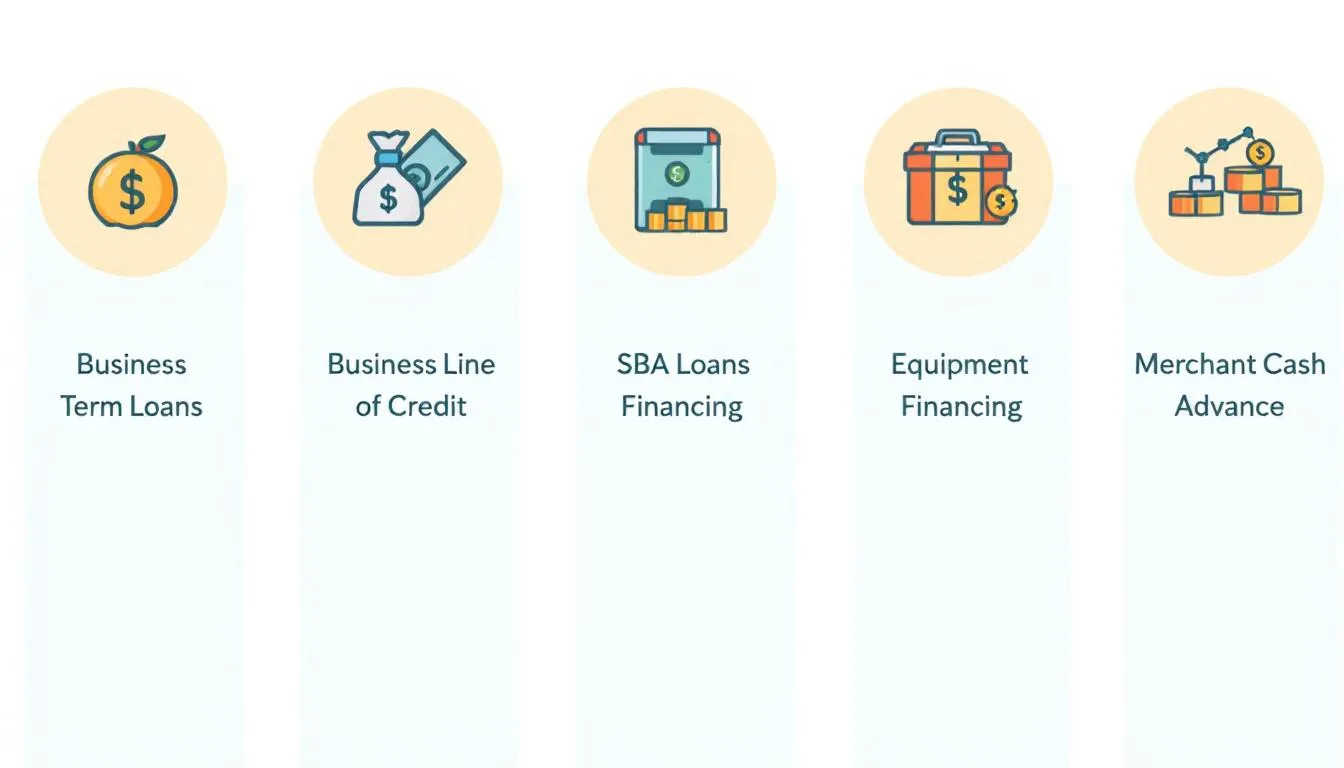
Small businesses have a variety of loan options to choose from. Let’s explore some popular types of loans and funding options that can help small businesses thrive.
Business term loans through our lender network have the following features:
Business term loans are similar to traditional financing structures. The business receives the funds as a one-time lump sum. It then repays the loan plus interest, typically in fixed amounts. Although some term loans may have variable interest rates, meaning the amount due can fluctuate.
These loans are ideal for businesses with ambitious plans, such as expansion, commercial property acquisition, or increased inventory purchases. Businesses can also use the loan proceeds to fund marketing campaigns, refinance debt, and more.
Term loans can be long or short term. Short-term loans may have higher monthly payments, but you pay less interest and have a shorter repayment period.
Pros:
Cons:
Business lines of credit through our lender network have the following features:
A business line of credit is a flexible financing option that gives businesses access to a predetermined amount of funds that can be used for various business expenses. Unlike a traditional loan, a line of credit allows businesses to borrow money as needed, up to the approved credit limit.
This means that businesses only pay interest on the amount they borrow, making it a cost-effective solution for managing cash flow fluctuations and unexpected expenses. With a business line of credit, businesses can have peace of mind knowing they have a financial safety net to support their operations and growth.
Whether covering payroll, purchasing inventory, or investing in new equipment, a business line of credit offers the flexibility and convenience to thrive in today’s competitive market. Business lines of credit can be secured or unsecured. Secured lines of credit use business assets as collateral. An unsecured business line of credit doesn’t require collateral.
Pros:
Cons:
SBA Loans have the following features:
The U.S. government backs Small Business Administration (SBA) loans and offers attractive terms for small businesses. These loans provide long-term financing with low-interest rates, making them an excellent option for startups or businesses needing substantial capital. Working with a preferred SBA lender can expedite the process.
Pros:
Cons:
Equipment financing through our lender network has the following features:
Equipment financing allows businesses to acquire the necessary equipment without paying the total purchase price upfront. Instead, businesses can spread out the cost of the equipment over time, making fixed monthly payments.
Equipment loans finance business equipment purchases and are secured by the equipment itself, making them easier to qualify for compared to term loans. This can be particularly beneficial for small businesses or startups that may not have the necessary capital to purchase equipment outright. Equipment financing can be used for various equipment, including machinery, vehicles, technology, and more.
The terms and conditions of equipment financing can vary depending on the lender and the business’s specific needs. Some common types of equipment financing include leasing, equipment loans, and equipment lines of credit. This type of financing allows businesses to acquire the necessary equipment without straining their cash flow.
Merchant cash advances (MCAs) through our lender network have the following features:
A merchant cash advance is an alternative funding option available to businesses. It is not a loan but rather a cash advance provided to a business in exchange for a percentage of its sales revenue (previously just from daily credit card sales). Merchant cash advances provide a lump sum based on future sales revenue, but they are one of the most expensive financing options available.
The merchant cash advance company usually bases the advance amount on the business’s average monthly sales. One of the main advantages of a merchant cash advance is that it provides quick access to funds, often within a few days.
Additionally, the approval process is typically less stringent than traditional loans, making it a viable option for businesses with less-than-perfect credit. However, it is vital to consider the high cost associated with merchant cash advances.
The fees and interest rates can be significantly higher than traditional loans, making it a costly financing option in the long run. Therefore, businesses should carefully evaluate their financial situation and consider the pros and cons before opting for a merchant cash advance.
Pros:
Cons:
Invoice factoring through our lender network has the following features:
Accounts receivable factoring involves selling unpaid customer invoices for immediate cash but comes with high fees and relinquishes control over the invoices. Instead of waiting for customers to pay their invoices, businesses can receive immediate funds from the factoring company, typically a percentage of the invoice value. Invoice financing allows businesses to use unpaid invoices as collateral for a cash advance, helping cover cash flow gaps while retaining control over collections.
This can be particularly beneficial for small businesses or those experiencing cash flow issues, as it provides them with the necessary funds to cover expenses and invest in growth opportunities. The factoring company then takes on the responsibility of collecting customer payments, allowing businesses to focus on their core operations.
Invoice factoring offers a flexible and quick source of financing, making it an attractive option for businesses looking to improve their cash flow position.
Pros:
Cons:
Working capital loans through our lender network have the following features:
Working capital loans are an excellent option for small businesses that need funds to cover day-to-day operational expenses or manage short-term cash flow gaps. These loans provide the necessary liquidity to keep the business running smoothly.
Pros:
Cons:
In addition to the common financing options listed above, several other small business loan types can support your operations, expansion, or real estate goals:
Commercial Real Estate Loans: Commercial real estate loans are used to purchase or lease property and have repayment terms similar to mortgages, often with lower interest rates due to real estate collateral. These loans are ideal for businesses looking to buy office space, warehouses, or storefronts.
Asset-Based Lending: Asset-based lending allows businesses to secure financing based on the value of their assets, such as accounts receivable, equipment, or inventory. Asset-based lending is commonly used by companies that need working capital but may not qualify for unsecured loans.
Microloans: Microloans are designed for newer businesses and typically offer small amounts of financing, usually ranging from $500 to $50,000. A microloan can help cover startup costs, inventory purchases, or marketing expenses when larger financing options are out of reach.
Every lender sets unique eligibility requirements. Most lenders base credit approval on your personal credit history, business credit, time in business, and annual revenue. Some loans require detailed documentation, such as financial statements, tax returns, and business plans.
Approved businesses we work with typically meet the following minimums for each loan type.
There are several factors you need to consider when choosing a business loan program. Let’s dive in and explore some key points that can help you make an informed decision.
Assessing your specific financing needs is crucial before applying for a small business loan. Determine why you need the funds and how much money you require. This often depends on how your business operates.
Are you looking to expand your business, purchase new equipment, or cover day-to-day expenses? Understanding the purpose of the loan will guide you in selecting the most appropriate financing option. You should have a sound business purpose in mind before you apply for funding.
To find the best loan option for your small business, take time to evaluate various lenders. Research their loan terms, interest rates, and repayment options. Compare these aspects across multiple lenders to ensure you get a favorable deal. Remember that interest rates can significantly impact how much you’ll ultimately pay back, so carefully consider this factor.
As mentioned, each lender sets its own eligibility criteria. You want to ensure you qualify. One option is pre-qualification, which doesn’t require a hard credit inquiry. This preliminary application lets you know if you’re qualified and gives you an estimate of your borrowing amounts and rates. You might want to pre-qualify with several lenders and compare options.
Here are the most common questions about popular types of business financing.
Various lenders offer small business loans. Let’s look at some of the popular types of loans and who provides them.
Traditional banks have long been a go-to source for small business loans. These banks typically have established relationships with local businesses and can provide financing based on creditworthiness and collateral. However, getting approved for a loan from a traditional bank can be challenging, especially for newer businesses or those with less-than-perfect credit.
On the other hand, online lenders have emerged as an alternative option for small business owners. Online lending platforms offer convenience and flexibility, making applying for loans easier and receiving funding quickly. These lenders often consider factors beyond just credit scores when evaluating loan applications, which can benefit entrepreneurs who may not meet the strict requirements of traditional banks.
Lenders typically consider your personal and business credit scores when applying for a small business loan. These scores are crucial in determining your eligibility for a loan and the terms you may be offered. Let’s take a closer look at the importance of credit scores and how they can impact your chances of securing funding.
Lenders look at overall credit scores and consider various aspects of personal and business credit. Here are a few key factors they may assess:
Getting a small business loan can be pretty challenging if you have bad credit. Lenders typically consider your credit score an essential factor in determining whether to approve your loan application. However, there are still options available for entrepreneurs with less-than-perfect credit.
Some lenders understand that not everyone has a stellar credit history. They offer specialized loans specifically designed for businesses with bad credit. These loans may have higher interest rates or stricter terms than traditional loans, but they allow entrepreneurs to secure the funding they need.
Online lenders are known to be more lenient. They often take into account other factors, such as your business’s revenue and cash flow, rather than solely relying on your personal credit score. This means that even if you have bad credit, you may still be able to obtain a small business loan from an online lender.
Bad Credit Business Loans through our lender network have the following features:
Securing a small business loan can vary in terms of timing. The duration depends on factors like the type of loan, lender processes, documentation required, and your preparedness as a borrower. Some loans may be approved within days or weeks, while others might take longer due to more extensive underwriting processes.
Collateral refers to assets that borrowers pledge as security against their loan amount. It provides assurance to lenders in case borrowers default on their payments. At the same time, not all loans require collateral; having it can increase your chances of securing a loan and may even help you negotiate better terms.
If you’re a small business owner looking for funding options, there are alternatives to business loans that you can consider. Let’s explore some popular types of loans and funding options for small businesses.
Small business owners can also utilize personal loans as a funding option. These loans are based on an individual’s creditworthiness rather than the business’s financials. However, it would be best if you were careful, as you typically don’t want to mix personal and business finances.
Business credit cards offer small business owners a convenient financing option while helping them build their business credit. These cards typically come with rewards programs and benefits tailored specifically for businesses.
Crowdfunding is a popular method for businesses to secure funding. It involves raising small amounts of money from many individuals, typically through online platforms. This can be an effective way for startups or small businesses to access capital, as it allows them to tap into a vast network of potential investors.

You should have a better understanding of the popular types of loans and funding options available for small businesses. Finding the right financing solution can be a game-changer for your business’s growth and success.
Now that you’re armed with knowledge about different loan options, it’s essential to assess your specific needs and financial situation. Consider factors such as interest rates, repayment terms, and eligibility requirements.
Don’t hesitate to contact lenders or financial advisors who can guide you through this process. Remember, every successful entrepreneur has faced similar challenges when seeking funding – it’s all part of the journey. So go ahead, explore your options, make an informed decision, and take that leap toward securing the funding your small business deserves.
Contact us if you have more questions or are ready to apply for a small business loan. Our funding experts can help you find the best financing options for your business goals.