Replacing broken-down or obsolete machines can lead to increases in productivity, capability, and efficiency. Even if you have the money available, financing might still be the better option than paying cash. While you will have to pay interest, you can avoid cash flow interruptions and ensure you have enough money to cover emergencies or invest in other business areas.
How does Equipment Financing work?
Equipment financing is a specialized loan or lease that spreads payments over a period of time. Many lenders offer 100% financing with no down payment for qualified applicants. Flexible payment structures are available, including monthly and seasonal options. Many lenders allow early payoff of equipment financing with varying penalty structures.
Let’s break down the different equipment finance options.
Equipment Loans
An equipment loan is a financing solution in which the purchased equipment serves as collateral for the loan. Using the equipment as collateral means a lower risk for the lender, who, in turn, lends larger amounts of money at lower interest rates and longer repayment terms. Equipment loans typically don’t require additional collateral. Equipment financing is usually available for new and used equipment.
When you pursue equipment finance, you will need the invoice from the equipment vendor. The invoice price is the amount you’re requesting for the loan. The lender will analyze the amount requested, the value of the equipment, your credit, and your business when deciding on your loan request.
If approved, you receive your money, purchase equipment, and begin paying off the loan in installments.
Key equipment financing facts:
-
Up to $5 million per piece of equipment.
-
Loan terms are between 1 and 6 years.
-
Interest rates start at 3.5%
-
Funded in 3-10 business days.
Equipment Leasing
Equipment leasing solutions are essentially a form of renting. Some equipment leases will include a buyout clause, offering to sell you the machinery or heavy equipment at the end of the lease for fair market value. However, for the most part, the leasing company retains ownership of the equipment’s title and repossesses it at the end of the lease term.
Consider leasing if:
-
You’re a new company and can’t get a loan.
-
You only need the equipment for a short period.
-
You’re worried about the depreciation of the equipment.
-
You need a lower monthly payment.
Equipment Loans vs Equipment Leasing
|
Feature |
Equipment Leasing |
Equipment Loan (Financing) |
|---|---|---|
|
Ownership |
No – you return or renew at lease end |
Yes – you own the equipment once paid off |
|
Upfront Cost |
Low or none |
May require a down payment |
|
Long-Term Cost |
Can be more expensive over time |
Typically less expensive overall |
|
Equipment Lifespan |
Best for short-term or fast-depreciating equipment |
Best for long-lasting equipment |
|
Equity Building |
No equity built |
Builds equity in the equipment |
|
Flexibility |
Easy to upgrade or replace at lease end |
Less flexible; resale or disposal needed if replacing |
|
Approval Requirements |
Typically easier to qualify, even with lower credit |
May require good credit and business history |
Who provides Industrial Equipment Financing?
You can finance nearly any business-critical asset, from heavy construction machinery to specialized software solutions. Several types of financial institutions provide industrial equipment financing and leasing solutions.
Let’s examine some of the most popular options.
Equipment Financing Companies
Some equipment manufacturing companies offer in-house financing solutions to facilitate the acquisition of industrial equipment, including loan and leasing options. Equipment manufacturers typically work with a financing partner to meet your business equipment needs.
There are obvious advantages to having the vendor serve as the lender, but there are also disadvantages. You won’t be able to get other small business loans through them. Another issue is that you’re limited in what and where you can purchase.
Traditional Banks
Some traditional brick-and-mortar commercial banks offer equipment leasing and financing. Bank of America offers loans starting at $25,000. First Citizen Bank’s subsidiary CIT Bank offers loans up to $1 million. The credit score most lenders typically require for equipment financing is 650.
Traditional banks usually offer the lowest interest rate, but not always. The drawback of conventional banks is that they typically have strict approval requirements, and it can take longer for credit decisions, meaning you have to wait longer to access funds. Banks usually consider the book value of equipment, but market value is also a significant factor.
Alternative Lenders & Lending Marketplaces
Online lending platforms are gaining popularity among small businesses, as they offer greater flexibility, competitive rates, and a faster turnaround for funding. Look for a lender or marketplace with a good reputation and a diverse loan portfolio.
At Pro Funding Options, we partner with some of the top equipment lenders in the industry. You can apply for an equipment loan through us or speak with one of our loan experts to discuss your options.
How do you qualify for Equipment Financing?
Each lender or marketplace has varying credit approval requirements. Most are upfront about their requirements, but some will only disclose them after you apply. Qualified applicants may receive same-day approvals for equipment financing under certain amounts.
When choosing a lending partner, look for transparency – less reputable lenders will try to hide their fees and rates. Compare other equipment financing companies to find the best deal possible.
To give an idea, here are the minimum qualifications when you apply for an equipment loan through Pro Funding Options:
-
Credit score: 600
-
Years in business: 1
-
Minimum annual revenue: $250,000
What are the benefits of Industrial Equipment Finance?
Industrial equipment financing helps preserve business cash flow by spreading equipment costs over time rather than requiring a large upfront payment. This allows companies to invest in essential machinery while maintaining access to working capital for day-to-day operations, payroll, or growth opportunities. Financing also provides flexibility, enabling businesses to upgrade outdated equipment and remain competitive without depleting financial reserves.
What are the drawbacks of Industrial Equipment Finance?
The primary drawback of industrial equipment financing is the long-term cost. Businesses may pay more over time due to interest and fees compared to purchasing equipment outright. Financing also adds a monthly obligation that can strain cash flow if revenue fluctuates. Additionally, some lenders require a strong credit profile or collateral, which could limit access for newer businesses or those with lower credit scores.
Industrial Equipment Finance Pros & Cons
Pros:
-
Preserves business cash flow
-
Protects working capital
-
Enables equipment upgrades without significant upfront costs
Cons:
-
Higher total cost due to interest and fees
-
Monthly payments can impact cash flow
-
May require strong credit or collateral
How to apply for an Industrial Equipment Loan:
The application process is relatively fast, and you can apply directly through our one-page application in a matter of minutes or reach out to one of our loan experts to guide you through the process.
Step 1: Make sure the equipment is the right purchase for your business.
You want to make sure the new or used equipment you’re financing is worth the cost of the loan. As you pay off the loan, you will build equity in the equipment. You want to ensure the equipment is built to last or will at least have resale value at the end of the loan. As you build equity, you can use that for future business loans.
Some things to consider:
-
Will the equipment still be helpful when you pay off the loan?
-
What are the anticipated maintenance costs?
-
Can your cash flow support monthly payments?
Step 2: Gather your documentation.
When applying for industrial or heavy equipment financing, you need to provide the following:
-
Driver’s license.
-
The invoice for the industrial or heavy equipment.
-
Voided check.
-
Bank statements from the past three months.
-
Financial statements.
Step 3: Complete the application.
Simply fill out our application or give us a call for more information.
Step 4: Speak to a representative.
After we receive your application, a senior director of operations will reach out to you. The director of operations will discuss your business needs and focus on your industrial or heavy equipment financing options and fixed-term business loan offers. We offer complete transparency, with no hidden fees or surprises.
You’ll get a complete breakdown of loan amounts, terms, and soft costs. Once you have all the information, you can see which options make the most sense for your equipment loan.
Step 5: Get approved.
Your equipment loan is approved when your application meets underwriting requirements and receives credit approval. Next, the funds go directly to the equipment vendor to pay the equipment invoice. We can help you set up automatic payments, or you can arrange to pay by check or electronic payment.
Frequently Asked Questions
Here are some of the most common questions about industrial and manufacturing equipment financing.
What can you purchase with an Equipment Loan?
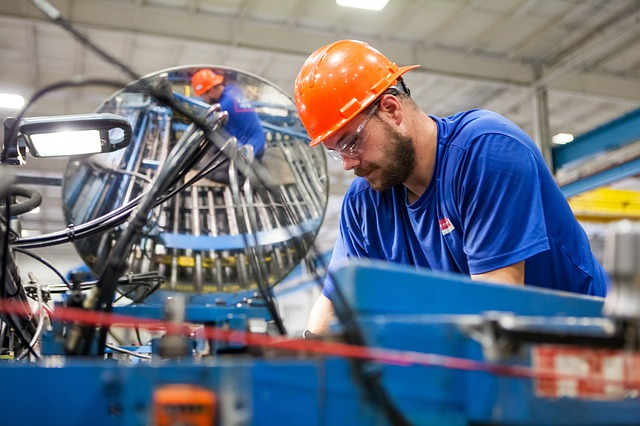
You can use the funds from your equipment loan to purchase a wide range of industrial machines and tools. Understanding the economic effects of different payment methods is important when making purchasing decisions.
Let’s look at a few examples.
Manufacturing Equipment
Here are a few examples of manufacturing equipment you can purchase:
-
Conveyor belt units.
-
Automation systems.
-
General-purpose equipment.
-
Laser equipment.
-
Grinding machinery.
-
Assembly system equipment.
-
Industrial scales.
-
3D Printers.
-
Engineering computers & software
Heavy Equipment
Examples of what you can buy with heavy equipment financing:
-
Forklifts and warehouse equipment.
-
Mining equipment.
-
Construction equipment, such as cranes, bulldozers, etc.
-
Tractors.
-
Skid steer loaders.
Industrial Tools
In addition to machinery, you can purchase industrial tools, such as:
-
Welding tools.
-
Grinding tools.
-
Power saws, drills, and hand tools.
-
Polishing machines.
-
Presses.
-
Forging and casting tools.
How do I choose an Industrial Equipment Financing company?
There are many lenders and lending platforms, and selecting the right one comes down to your unique business needs. A good financial partner will consider both the book value and market value of your equipment.
Some lenders offer financing options that cover soft costs, such as delivery, installation, or training. Short-term cash flow needs often influence decisions regarding equipment financing. Longer loan terms can result in lower monthly payments, but shorter repayment terms may save more in interest over time. Deferred or seasonal payments are offered during contract origination, subject to limitations.
Here are some important considerations when shopping around lenders and lending platforms:
-
Who offers the best interest rate?
-
Do they specialize in financing for your industry?
-
What do the reviews and other customers say about them?
-
Do they offer a variety of loan types to meet your needs?
What are the tax benefits of Industrial Equipment Financing?
Equipment financing can unlock significant tax savings through Section 179. Section 179 allows a first-year write-off of eligible equipment costs up to $ 1.25 million.
Can I get Industrial Equipment Financing with Bad Credit?
Yes, you can still qualify for industrial equipment financing even with a bad credit score. Because the equipment itself serves as collateral, lenders are often more flexible with credit requirements. Typically, there are no blanket liens, so your personal assets remain protected.
While you may face slightly higher rates or shorter terms, your credit score plays a minor role compared to what it would with unsecured financing. The most competitive rates, however, are still reserved for stronger credit profiles.
Industrial Equipment Financing – Final Thoughts
Financing is a valuable option when you need equipment to keep your business running or help it grow. With the numerous lending institutions offering equipment financing, you need to select one that is best suited for your business. You want to partner with someone who knows your industry and cares about your business goals.
At Pro Funding Options, we have experience helping businesses like yours get the industrial and manufacturing equipment they need. Reach out to one of our loan experts today to discover how their extensive experience can help your company acquire the necessary equipment.